Exploring the Benefits and Types of Dry Needling Therapy
Content is medically reviewed by:
Dr. Shakti Singh
Dry needling, a popular therapeutic technique, has gained considerable attention for its effectiveness in treating a variety of musculoskeletal issues. This is a minimally invasive procedure offered by trained professionals, to alleviate pain and improve mobility. In this article, we will delve into the intricacies of dry needling, the conditions it can address, and crucial considerations for those contemplating this treatment.
What is Dry Needling?
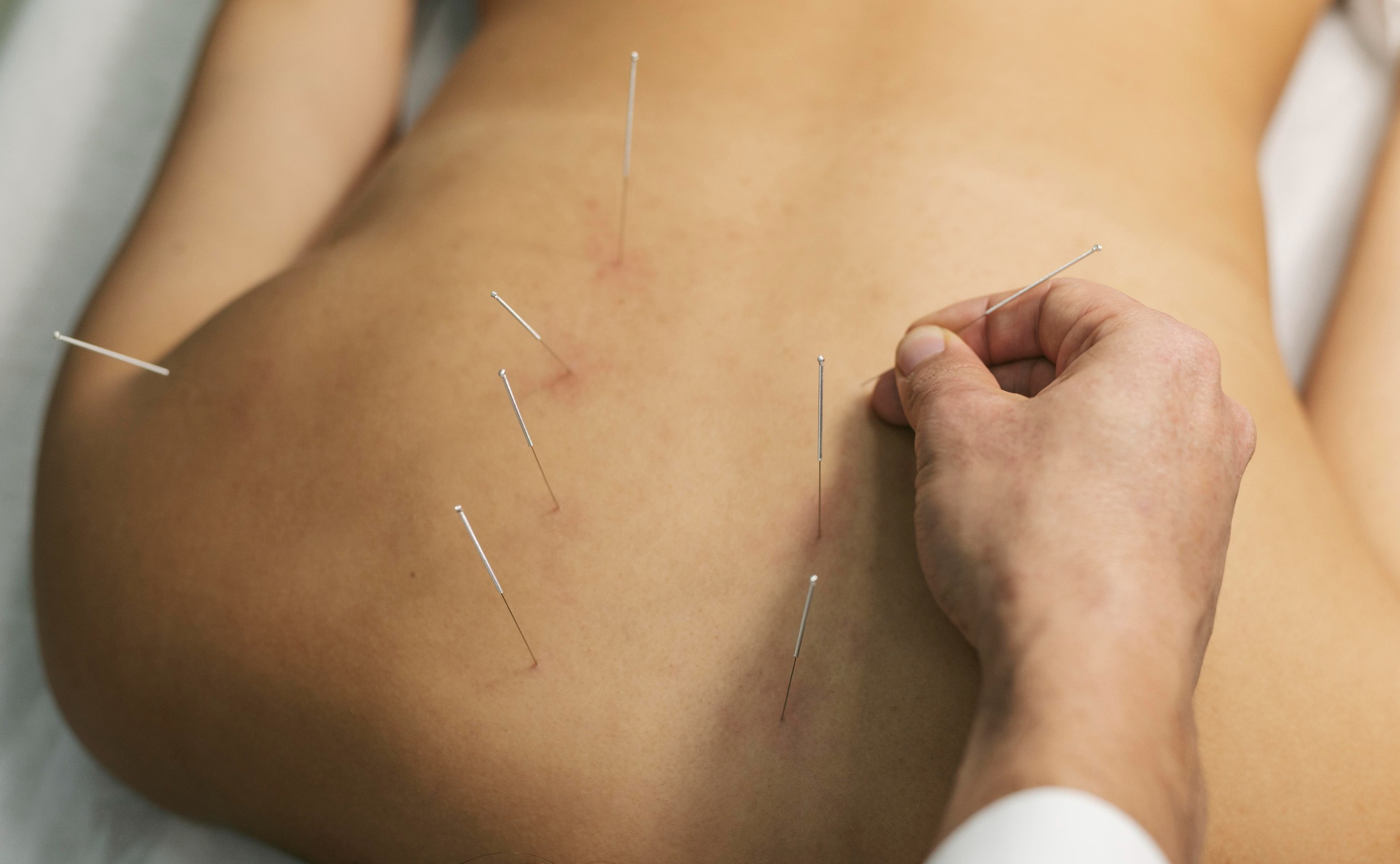
Dry needling is a specialized therapy that employs fine, sterile needles to stimulate trigger points, muscles, and connective tissues in the body. Unlike acupuncture, which is rooted in traditional Chinese medicine and focuses on balancing the body’s energy flow, dry needling is firmly grounded in modern Western medicine and focuses on the musculoskeletal structures.
How Does It Work?
The primary goal of dry needling is to release or activate a particular muscle or nerve and reduce pain. Practitioners insert thin needles into specific points of the body, targeting muscle knots, or trigger points, tendons, scars , nerves. This process creates micro-injuries in the affected tissues, which triggers the body’s natural healing response. It promotes blood flow,(1) oxygenates the muscles, increases body’s natural pain threshold (2)and releases tightness, ultimately leading to pain relief and improved mobility.(3)
Advantages of Dry Needling
Dry needling offers several advantages:
Pain Relief
It is highly effective in reducing pain associated with muscle tightness, spasms, and trigger points.
Enhanced Mobility
By releasing muscle tension, dry needling can improve joint range of motion.
Faster Recovery
The procedure stimulates the body’s natural healing mechanisms, speeding up recovery.
Minimally Invasive
It involves small needles, causing minimal discomfort.
Complementary Therapy
Dry needling can be used in conjunction with other physiotherapy techniques for comprehensive rehabilitation.
Types of Dry Needling
There are 3 primary types of dry needling:
Point Dry Needling
This is the most common form, targeting specific trigger points in muscles to relieve pain and tension.
Dry Needling
Involves inserting needles just below the skin’s surface to stimulate sensory nerves, which can help manage pain and reduce muscle tightness.
Electrical dry needling :
In electrical dry needling,low frequency currents are delivered to the tissues using needle electrodes. (4)
Who Shouldn’t Get Dry Needling Treatments?
dry needling is generally safe, there are certain individuals who should avoid or be cautious about this treatment:
Pregnant Women
Dry needling in and around the muscles surrounding the abdominal area is not recommended during pregnancy.
Bleeding Disorders
Those with clotting disorders, haemophilia should be cautious due to the risk of excessive bleeding.(5)
Needle Phobia
Individuals with a strong fear of needles may not be suitable candidates.
Infections
individuals presenting with blood related infections should not undergo this treatment until the infection subsided.
Before and After Dry Needling Treatment
Before the procedure, it’s crucial to consult with a qualified practitioner who will assess your condition and determine the best course of action. After the treatment, you may experience some mild soreness, slight bruising around the treated point, but this should subside within a day or two. It’s essential to follow any post-treatment instructions provided by your therapist, such as gentle stretches or exercises.
Physiotherapy Dry Needling Side Effects
The side effects of dry needling are generally mild and short-lived. Some individuals may experience minor bruising, soreness, or temporary discomfort at the needling sites. Serious complications are extremely rare, but it’s essential to choose a well-trained and certified therapist to minimize risks.
Common condition dry needling can help
Neck pain: The neck is a complex structure, with muscles, ligaments, and joints that can become a source of discomfort when they are overused or injured. Chronic neck pain can lead to headaches, reduced mobility, and decreased quality of life.Dry needling targets the specific trigger points in the neck muscles that are causing pain and discomfort including trapezius, sternocleidomastoid, deep cervical extensors. Dry needling into these muscles helps release triggers points, furthermore it helps in relaxation of these muscles and helps improve posture. (6)
Fibromyalgia : Fibromyalgia affects millions of people worldwide, and its exact cause remains elusive. It’s characterized by chronic, widespread pain, tender points in various areas of the body, fatigue, sleep disturbances, and cognitive difficulties.Dry needling can target trigger points in the muscles, potentially providing relief from the chronic pain associated with fibromyalgia.Also by releasing muscle tension and knots, patients may experience enhanced mobility and flexibility, which can be particularly beneficial for those with fibromyalgia. (7)
Low back pain : Low back pain is a widespread issue that can significantly impact one’s quality of life.It can result from various causes, including muscle strain, poor posture, herniated discs, and chronic conditions.Each muscle in the back and pelvic area can develop a trigger point in response the the mentioned conditions and lead to a characteristic pain pattern. Dry needling targets specific trigger points or knots in the muscles of the low back. The insertion of fine needles into these areas creates micro-injuries, which stimulate the body’s natural healing response which relieves pain and decreases muscle spasm.(8)
Tendinopathy: Tendinopathy is an inflammatory condition that leads to pain swelling, irritation at the tendenous insertion of the muscle leading to pain and inability to use the muscle.It can occur due to repetitive overloading of the tendon.Dry needling in the tendon involves repeatedly fenestration of the affected tendon which halts the degeneration and promotes localized bleeding and fibroblastic proliferation thus leading to healing of the tendon.(9)
Plantar fasciitis : It is the degeneration of the fascia on the base of foot often presenting as pain the heel with initiation of movement.Insertion of dry needles on the origin and insertion points of plantar fascia along the base and medial border of foot stimulates inflammation in the area due to microtrauma which helps healing.(10)
Chronic tension headaches : This type of headache occurs due to affected fascia in the pericardial, neck and shoulder region.Dry needling the trigger points in trapezius,masseter, temporalis, frontalis, splenius cervicis and capitis, and sub-occipital muscles helps relive these headaches.(11)
Knee Osteoarthritis: knee pain due to degeneration of the joint surfaces is extremely common and often a source of disability. Electrical dry needling in the periosteum of bones surrounding the knee joint along with manual therapy and exercises helps alleviate pain and restore function at a greater scale.(12)
How Senocare can help?
Dry needling is a powerful therapeutic technique that can offer significant relief from musculoskeletal pain and improve overall mobility.Hence it’s important to seek treatment from a qualified professional and be aware of potential contraindications.We at Senocare India provide at home consultation and dry needling sessions along with carefully created personalised exercise plans to cater to your needs. We help you understanding the advantages, types of treatment so you can make an informed decision about whether dry needling is the right choice for you.
Bibliography
1. Sandberg M., Lindberg L.G., Gerdle B. Peripheral effects of needle stimulation (acupuncture) on skin and muscle blood flow in fibromyalgia. Eur. J. Pain. 2004;8:163–171. doi: 10.1016/S1090-3801(03)00090-9.
2. Hsieh Y., Kao M., Kuan T., Chen S., Chen J., Hong C. Dry needling to a key myofascial trigger point may reduce the irritability of satellite MTrPs. Am. J. Phys. Med. Rehabil. 2007;86:397–403. doi: 10.1097/PHM.0b013e31804a554d.
3. Cagnie B, Dewitte V, Barbe T, Timmermans F, Delrue N, Meeus M. Physiologic effects of dry needling. Curr Pain Headache Rep. 2013 Aug;17(8):348. doi: 10.1007/s11916-013-0348-5. PMID: 23801002.
4. Lara-Palomo IC, Gil-Martínez E, Antequera-Soler E, Castro-Sánchez AM, Fernández-Sánchez M, García-López H. Electrical dry needling versus conventional physiotherapy in the treatment of active and latent myofascial trigger points in patients with nonspecific chronic low back pain. Trials. 2022 Mar 28;23(1):238. doi: 10.1186/s13063-022-06179-y. PMID: 35346331; PMCID: PMC8961901.
5. Muñoz M, Dommerholt J, Pérez-Palomares S, Herrero P, Calvo S. Dry Needling and Antithrombotic Drugs. Pain Res Manag. 2022 Jan 7;2022:1363477. doi: 10.1155/2022/1363477. PMID: 35035647; PMCID: PMC8759918.
6. Navarro-Santana MJ, Sanchez-Infante J, Fernández-de-Las-Peñas C, Cleland JA, Martín-Casas P, Plaza-Manzano G. Effectiveness of Dry Needling for Myofascial Trigger Points Associated with Neck Pain Symptoms: An Updated Systematic Review and Meta-Analysis. J Clin Med. 2020 Oct 14;9(10):3300. doi: 10.3390/jcm9103300. PMID: 33066556; PMCID: PMC7602246.
7. Valera-Calero JA, Fernández-de-Las-Peñas C, Navarro-Santana MJ, Plaza-Manzano G. Efficacy of Dry Needling and Acupuncture in Patients with Fibromyalgia: A Systematic Review and Meta-Analysis. Int J Environ Res Public Health. 2022 Aug 11;19(16):9904. doi: 10.3390/ijerph19169904. PMID: 36011540; PMCID: PMC9408486.
8. Lara-Palomo IC, Gil-Martínez E, Antequera-Soler E, Castro-Sánchez AM, Fernández-Sánchez M, García-López H. Electrical dry needling versus conventional physiotherapy in the treatment of active and latent myofascial trigger points in patients with nonspecific chronic low back pain. Trials. 2022 Mar 28;23(1):238. doi: 10.1186/s13063-022-06179-y. PMID: 35346331; PMCID: PMC8961901.
9. Stoychev V, Finestone AS, Kalichman L. Dry Needling as a Treatment Modality for Tendinopathy: a Narrative Review. Curr Rev Musculoskelet Med. 2020 Feb;13(1):133-140. doi: 10.1007/s12178-020-09608-0. PMID: 31942676; PMCID: PMC7083985.
10. Dunning J, Butts R, Henry N, Mourad F, Brannon A, Rodriguez H, Young I, Arias-Buría JL, Fernández-de-Las-Peñas C. Electrical dry needling as an adjunct to exercise, manual therapy and ultrasound for plantar fasciitis: A multi-center randomized clinical trial. PLoS One. 2018 Oct 31;13(10):e0205405. doi: 10.1371/journal.pone.0205405. PMID: 30379937; PMCID: PMC6209187.
11. Gildir S, Tüzün EH, Eroğlu G, Eker L. A randomized trial of trigger point dry needling versus sham needling for chronic tension-type headache. Medicine (Baltimore). 2019 Feb;98(8):e14520. doi: 10.1097/MD.0000000000014520. PMID: 30813155; PMCID: PMC6408118.
12. Dunning J, Butts R, Young I, Mourad F, Galante V, Bliton P, Tanner M, Fernández-de-Las-Peñas C. Periosteal Electrical Dry Needling as an Adjunct to Exercise and Manual Therapy for Knee Osteoarthritis: A Multicenter Randomized Clinical Trial. Clin J Pain. 2018 Dec;34(12):1149-1158. doi: 10.1097/AJP.0000000000000634. PMID: 29864043; PMCID: PMC6250299.