Exploring the Benefits of Ultrasound Therapy in Physiotherapy

Content is medically reviewed by:
Dr. Shakti Singh
What Is Ultrasound Therapy in Physiotherapy?
Ultrasound therapy commonly regarded as therapeutic ultrasound, is a non-invasive physiotherapeutic treatment that utilises sound waves to promote the healing of soft tissues and alleviate pain. These high-frequency sound waves that are beyond the range of human hearing produce deep heating effects within the body.
What Are Its Types?
There are primarily two types of ultrasound therapy namely: continuous ultrasound and pulsed ultrasound(1). The choice between these types depends on the specific condition being treated and the therapeutic goals.
Continuous ultrasound
his provides a continuous stream of sound waves. Since it is continuous, this type of ultrasound produces a greater amount of heat and it used in chronic conditions such as chronic back aches, joint stiffness following osteoarthritis.
Pulsed ultrasound
It delivers waves in intermittent bursts. This is used more actively in acute injuries such ankle sprains.
What Are the Treatment Parameters of Ultrasound Therapy in Physiotherapy?
When administering ultrasound therapy, several crucial treatment parameters are considered. These parameters include the frequency of the ultrasound waves, the intensity or power level, the treatment duration, and the choice between continuous or pulsed ultrasound. The two most commonly used frequencies in ultrasound therapy are 3Mhz used in superficial areas and 1Mhz used for thermal affects in more deeply situated areas. A higher intensity between 0.1 to 0.25 W/cm2 is used in pulsed ultrasound for acute injuries whereas continuous ultrasound for chronic conditions works on low to moderate intensities ranging between 0.25 to 1 W/cm2 (2)
Common Injuries Treated With Ultrasound Therapy in Physiotherapy
Ultrasound therapy is effective in treating a variety of injuries and conditions. It is commonly used to address musculoskeletal issues such as
Tendonitis
Ultrasound helps reduce pain and inflammation in the tendons, promoting faster healing. (3)
Sprains and Strains
By increasing blood flow and reducing muscle spasm, ultrasound therapy can aid in the recovery of sprains and strains.
Bursitis
The deep heating effect of ultrasound can alleviate discomfort associated with bursitis, an inflammation of the fluid-filled sacs that cushion joints.
Muscle Spasms
Ultrasound can relax muscle tissue and improve flexibility, making it beneficial for patients with muscle spasms.
Bone injuries
ultrasound therapy if provided 1-2 weeks post injury helps enhance bone healing. It is however not recommended for unstable fractures. It is found to be extremely beneficial in hairline fractures.(2)
Varicose ulcers
it helps promote healing in case of pressure sores along with varicose ulcers(2)
What To Expect
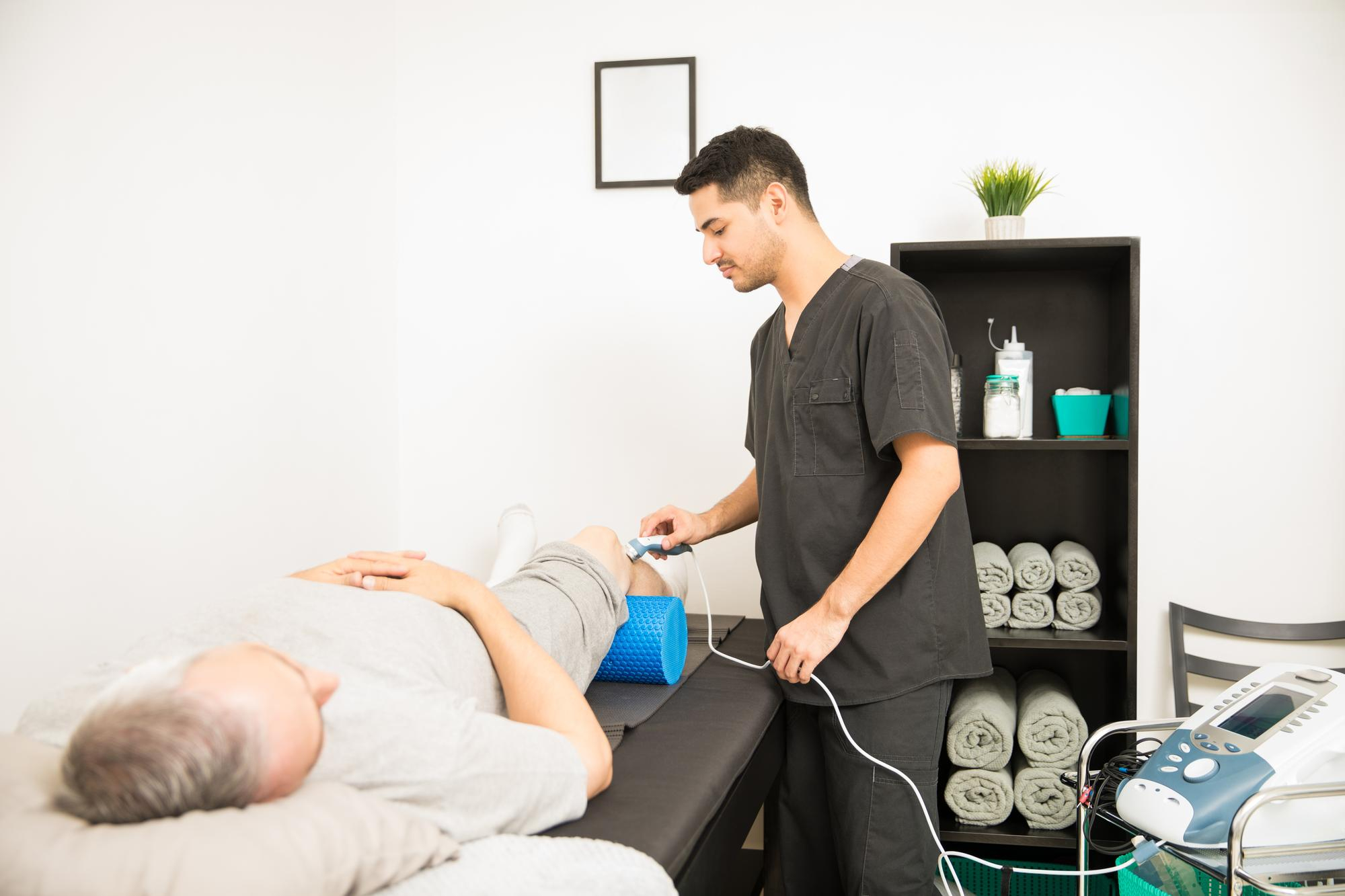
During an ultrasound therapy session, you can expect to lie comfortably while a physiotherapist applies a water-based gel to the targeted area. This gel allows for efficient transmission of the ultrasound waves. The therapist will then move the ultrasound probe over the injured area in a circular motion, ensuring even distribution of the sound waves. Usually no sensation is felt except the cool gel , however in high intensities minimal heating might be felt. The session usually lasts between 5 to 10 minutes.
How Safe Is It?
Ultrasound therapy is considered safe when administered by trained professionals. It is a non-invasive procedure that utilizes sonic waves. However, certain precautions are taken to ensure patient safety, such as avoiding the treatment over areas with reduced sensation or open wounds or in areas experiencing burns. Patients with specific medical conditions or pregnancy should consult with their healthcare provider before undergoing ultrasound therapy.
Does Ultrasound Therapy in Physiotherapy Work?
Numerous studies and clinical trials have supported the effectiveness of ultrasound therapy in physiotherapy. It is particularly beneficial in promoting tissue healing, reducing pain, and improving range of motion. However, the success of the treatment depends on various factors, including the patient’s condition, adherence to treatment protocols, and the skill of the therapist.
What Are the Limitations of Ultrasound Therapy in Physiotherapy?
While ultrasound therapy is a valuable tool in physiotherapy, it has its limitations. It may not be the most suitable treatment for all conditions or injuries. Some limitations include:
Depth of Penetration
Ultrasound waves have limited penetration, making it less effective for deep-seated injuries.Operator Skill
The effectiveness of ultrasound therapy can be influenced by the skill and experience of the physiotherapist administering the treatment.
Patient Variability
Individual patient responses may vary, and not everyone experiences the same level of relief. In conclusion, ultrasound therapy in physiotherapy is a versatile and safe treatment option for a range of soft tissue injuries. While it is not a panacea, when used appropriately, it can significantly contribute to pain relief and the enhancement of the body’s natural healing processes. Patients should discuss the suitability of ultrasound therapy with their healthcare providers and ensure they receive treatment from qualified professionals to achieve the best results.
Bibliography
1. Király M, Gömöri E, Kiss R, Nógrádi N, Nusser N, Hodosi K, Bender T. Effects of various types of ultrasound therapy in hip osteoarthritis - a double-blind, randomized, controlled, follow-up study. Physiother Theory Pract. 2022 Dec;38(12):1958-1968. doi: 10.1080/09593985.2021.1895386. Epub 2021 Mar 10. PMID: 33715574.
2. Singh,Jagmohan.Textbook of Electrotherapy ,3rd ed.Jaypee Brothers Medical Publishers,2012.
3. Akın C., Öken Ö., Köseoğlu B.F. Short-term effectiveness of ultrasound treatment in patients with lateral epicondylitis: randomized, single-blind, placebo-controlled, prospective study. Arch Rheumatol. 2010;25(2):050–055.