Elder Travel: A Complete Guide to Safe, Comfortable and Hassle-Free Travel for Seniors
Last Diwali, a family in Delhi found themselves scrambling. Their father — 74, perfectly healthy, quietly independent — had decided he wanted to travel to Pune to visit his daughter. A simple enough plan. What nobody had thought through was the week before the journey.
His Aadhaar card was in one drawer. His train ticket confirmation was in a forwarded WhatsApp message somewhere. His blood pressure medication was in three different strips across two rooms. His children were in different cities. Nobody was there to sit with him, go through the list, make sure everything was in order before he left.
He made the trip. But it was more stressful than it needed to be — for him, and for everyone who loves him.
This guide is for families who want to do that better.
Travel doesn't stop mattering when people get older. Weddings, family visits, pilgrimages, holidays, medical appointments — these things are part of life. What changes is the preparation. For elderly parents travelling with family support or on their own, the difference between a smooth journey and a difficult one often comes down to a handful of things being in order before departure day.
Below, we cover what elder travel actually involves, what makes it more complicated, how to prepare for it practically, what documents to have ready, and where families can get support when they are not around to help in person.
What Is Elder Travel?
Elder travel simply refers to travel undertaken by older adults — and it covers a much wider range of journeys than people usually assume.
It includes:
- Visiting children or grandchildren in another city
- Attending weddings, family ceremonies and festivals
- Religious pilgrimages (Vaishno Devi, Tirupati, Haridwar, Shirdi and many others)
- Domestic holidays and leisure trips
- International travel to visit family abroad
- Travelling for medical appointments or specialist consultations
The kind of support a senior needs depends entirely on the individual. Some people are traveling independently well into their eighties with no assistance whatsoever. Others benefit from help with paperwork, company on the journey, or simply having someone check that everything is in place before they leave home.
There is no single definition of what elder travel looks like — and there should not be.
Why Travel Can Become More Complicated for Seniors
It is rarely one large problem. It is usually several small ones that arrive at the same time.
Mobility and Getting Around
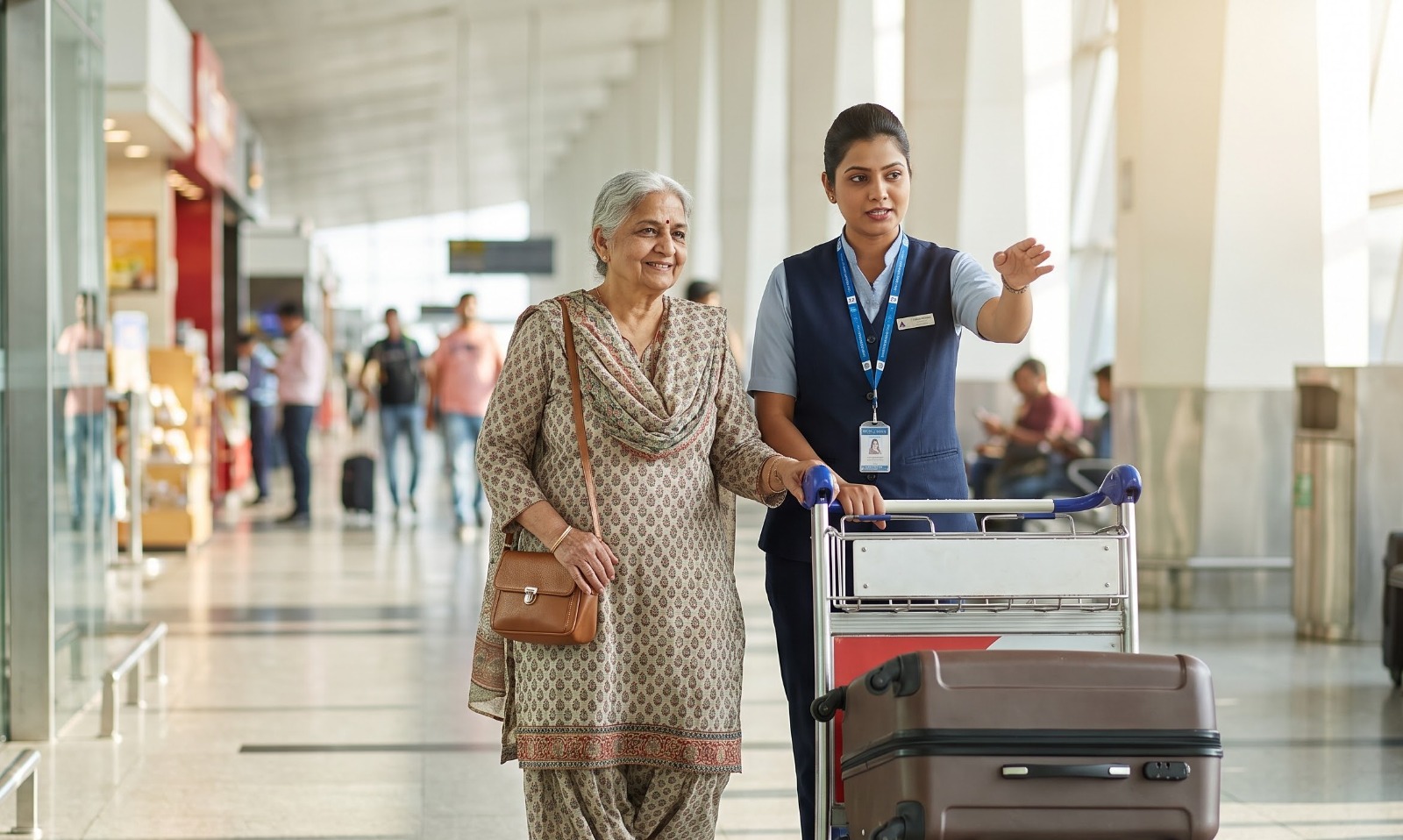
Airports and railway stations are large, loud and physically demanding environments. Long queues, heavy luggage, escalators, crowded platforms and irregular assistance can all be difficult to navigate — particularly for seniors with joint pain, reduced mobility or a fear of falling.
Managing Travel Documents
For domestic travel, a senior may need their Aadhaar card, PAN card, or senior citizen ID. For international travel, a valid passport, visa and travel insurance may all be required. Tracking these documents, ensuring they are current, and having physical copies ready takes more effort than most families plan for.
Airport and Railway Navigation
Wheelchair assistance, priority boarding, senior citizen quotas on trains, reserved compartments — these provisions exist, but knowing how to request them and following up if they are not arranged correctly takes time and familiarity with the process.
Carrying Medicines and Health Information
Travelling with prescription medication raises questions that are easy to overlook: Are all medications in hand luggage? Is there enough supply for the full trip, including buffer days? Does the senior have a written medication list in case something goes wrong at the destination?
Filling Forms and Completing Applications
Travel sometimes requires forms — visa applications, insurance paperwork, travel declarations. For seniors who are less comfortable with online processes or official documentation, this step alone can make a journey feel overwhelming before it has even started.
Travelling Without Family Members
When an elderly parent is travelling alone — and many do — the stakes of something being incomplete are higher. There is no one accompanying them to solve a problem at the last minute. Getting everything right before the journey matters more, not less.
Communication and Technology
Checking in online, navigating an app, finding a platform on a digital board, calling for help on an unfamiliar phone — these small technology requirements accumulate. Seniors who are less confident with technology may find parts of the journey disorienting even when the logistics are otherwise fine.
How to Prepare an Elderly Parent for Travel
This is the section that actually makes a difference. Most travel problems for seniors are not emergencies — they are gaps in preparation that become problems on the day.
1. Plan the Journey in Advance
Do not leave the details to the last few days. Go through the full journey: departure, transit, arrival, accommodation, onward transport and any assistance required at each stage. Write it down somewhere the senior can refer to, not just somewhere it exists in your own head or phone.
Consider:
- Mode of transport and class of travel
- Departure time relative to the senior's daily routine and energy levels
- Transfer requirements mid-journey
- Accommodation accessibility at the destination
- Who will receive them at the other end
2. Check Travel Documents
Go through this list at least a week before departure — not the night before.
- Government-issued photo ID (Aadhaar, PAN, Voter ID)
- Passport and visa, if travelling internationally
- Tickets (digital and printed copies)
- Accommodation confirmation
- Travel insurance documents
- Emergency contact list (on paper, not only on the phone)
- Copies of key documents kept separately from originals
If any document needs renewal, that process can take time. Starting early is not optional.
3. Organise Health Information
This is where most families underestimate the effort required.
Before travel, put together a simple health summary that a doctor or pharmacist at any destination could read and act on:
- Current medications with dosage and timing
- Allergies and sensitivities
- Blood group
- Name and contact of the regular doctor
- Recent relevant test results or reports
- Emergency contacts
Senocare's Medical Passport does exactly this — it organises a senior's health information so it is accessible when needed, rather than scattered across prescriptions, notebooks and WhatsApp messages.
Elder Travel Checklist
Use this before every trip. Print it. Go through it together with your parent if you can.
One to two weeks before travel
- Confirm all documents are valid and in one place
- Book tickets — senior citizen quota or priority seating where available
- Confirm accommodation is accessible
- Organise medications — sufficient supply plus a few extra days
- Get prescription copies and a medication list written out
- Arrange wheelchair or mobility assistance if required (most airlines and railways require advance notice)
- Share the full itinerary with at least two family members
- Ensure the senior's phone is charged, topped up and working
On the day of travel
- Documents accessible — not buried in a bag
- Medications in hand luggage, not checked baggage
- Emergency contacts written on paper and stored separately
- Confirm transport to the station or airport
- Phone charged and mobile data active
During the journey
- Staying hydrated
- Taking medications at the right time
- Family members kept updated at key points (departure, transit, arrival)
- Sufficient rest built into long journeys
Travel Documents Seniors May Need
Passport
For international travel, the passport must be valid for at least six months beyond the date of travel in most cases. Renewal takes time — check this well in advance.
Visa and Immigration Documents
Visa requirements depend on the destination. Some countries offer easier processes for senior citizens; others do not. Read the requirements carefully and do not leave the application to the last few weeks.
Identity Proof
For domestic travel in India, an Aadhaar card, PAN card, Voter ID or senior citizen card is generally accepted. It is worth having at least two forms of ID available.
Medical and Insurance Documents
Travel insurance is worth taking seriously for elderly travellers — particularly for international journeys. Keep the policy document, insurer contact details and claim process accessible.
Emergency Contact Information
This should be written on paper and kept somewhere separate from the phone. If the phone is lost or the battery dies, this information still needs to be findable.
Copies of Important Documents
Keep photocopies of the passport, tickets, insurance and ID in a separate bag from the originals. For international travel, storing a digital scan in email or cloud storage adds another layer of backup.
Can Seniors Get Help With Passport and Travel Documentation?
Yes — and this is more useful than most families realise.
The administrative side of travel can be genuinely hard for seniors to manage independently. Passport renewal involves a form, a visit, specific documentation in a specific format, and sometimes follow-up. Visa applications require the same. Neither process is intuitive if you have not done it recently.
A care support team can help by:
- Organising the documents required
- Sitting with the senior to fill in forms accurately
- Ensuring the right documents are gathered before any visit or submission
- Following up on status where appropriate
- Explaining each step clearly so the senior knows what is happening and why
This is not about doing it instead of the senior. It is about making sure the process is not overwhelming.
Senocare's Forms & Filing service covers documentation assistance, including travel paperwork, banking, Aadhaar and senior citizen card support — all of which can come into play when planning a journey.
Elder Travel for Seniors Travelling Alone
Many seniors travel alone — by choice, by circumstance, or because family members cannot take time away. This is entirely normal, and it is entirely manageable with the right preparation.
Before the Journey
Everything in the preparation section above applies here — but more carefully. There is no one accompanying them to solve a problem on the day. Get the documents right, the medications organised, the itinerary written out, and the assistance arranged in advance.
At the Airport or Railway Station
Most major airports and railway stations in India have provisions for senior citizens: priority queues, wheelchair assistance, reserved waiting areas. These need to be requested in advance — they are not automatic.
Call the airline or railway in advance. Ask specifically what is available and how to confirm it.
During the Journey
A simple check-in system helps: agree with the senior that they will send one message at departure, one at transit (if applicable) and one on arrival. Not elaborate — just a signal that they are fine. It gives both the senior and the family peace of mind without being intrusive.
At the Destination
Who receives them? Is the accommodation familiar? Is there someone the senior can call if something goes wrong? These questions are easy to answer in advance. They are harder to answer if the senior is calling from an unfamiliar place, disoriented, with a low phone battery.
Keeping Family Members Updated
Create a simple group — a WhatsApp group with the key family members involved — and use it to share the itinerary and updates. One person should be the point of contact the senior calls if anything goes wrong.
Elder Travel for Family Visits, Pilgrimages and Holidays
Visiting Children and Family
This is the most common reason elderly parents travel in India. The journey itself is usually domestic, the destination is family, and the emotional stakes are high in both directions. Make the logistics match the occasion — plan it properly, do not leave it to chance.
Religious and Pilgrimage Travel
Pilgrimages involve physical demands that can be underestimated. Vaishno Devi, Tirupati, the Char Dham circuit — these are not casual outings. Research the physical requirements of the specific site, what assistance is available on-site, and whether the senior's health and mobility make it appropriate. Many pilgrimage sites have dedicated facilities for senior citizens and people with limited mobility.
Holidays and Leisure Travel
A holiday taken in later life can be one of the best kinds. The pace is different, the priorities are clearer. Plan for comfort over convenience — a slightly longer journey that avoids a difficult transfer, accommodation with a lift, a lighter itinerary with rest built in.
Weddings and Family Events
These tend to involve more moving parts: multiple venues, variable schedules, large crowds, long days. Make sure the senior has somewhere quiet to rest when they need it, that their medications travel with them across venues, and that at least one family member at the event knows to check in on them through the day.
How Senocare Supports Elder Travel
Senocare's work with families spans a range of practical needs — and several of those are directly relevant when a senior is planning or preparing for a journey.
Travel and Tour Assistance
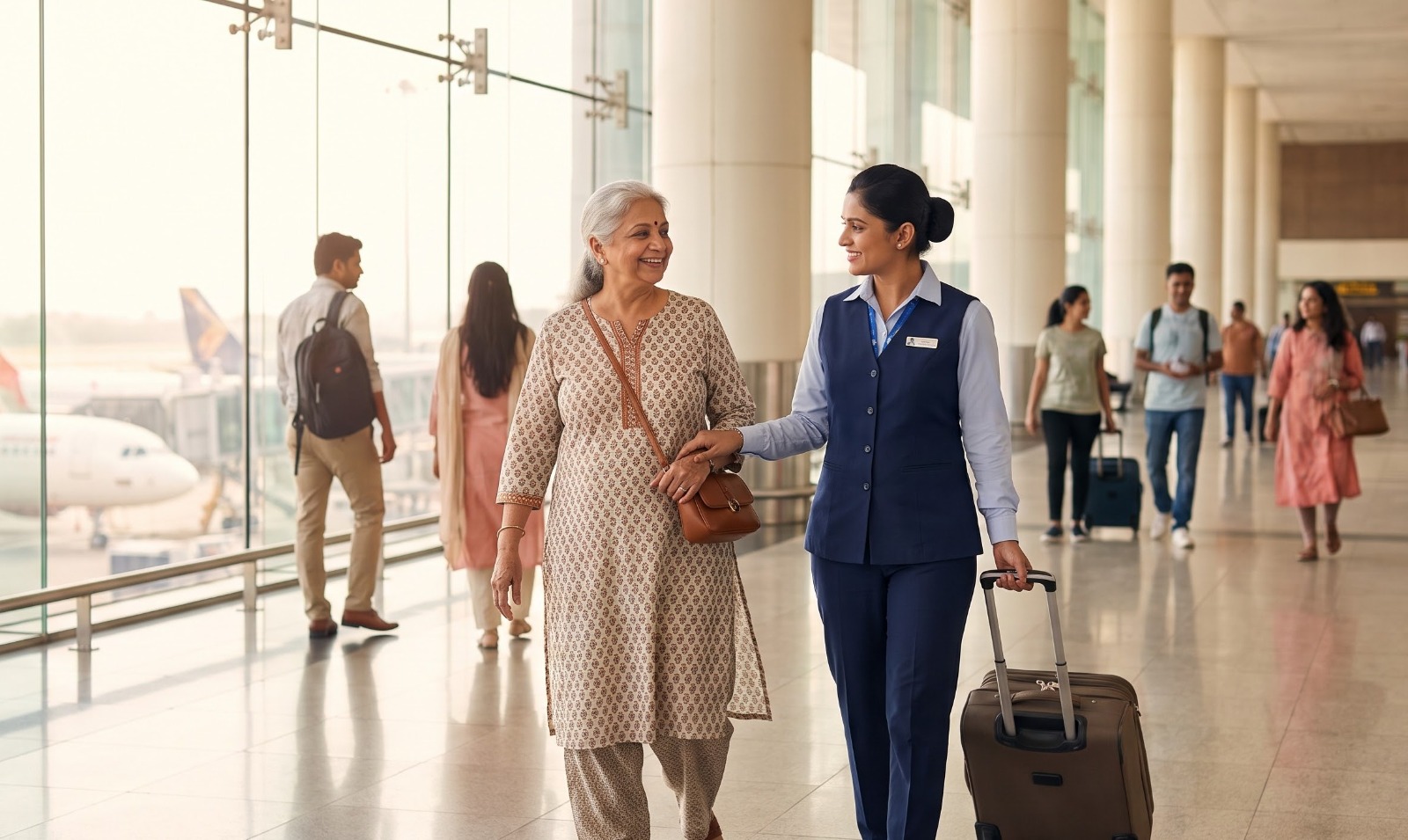
Coordinating the practical elements of a journey: bookings, transport arrangements, assistance at transit points, and support for seniors who need company or help navigating unfamiliar places.
Documentation and Forms Support
Helping seniors and families with the paperwork side of travel — forms, documentation, applications and follow-up. Part of Senocare's wider Forms & Filing service.
Assisted Visits
Accompanying seniors to offices, stations or appointments when they need support on the day — not only for travel, but for the preparation steps that travel often requires.
Personal Care Manager Coordination
Each Senocare family has a dedicated Care Manager who understands the senior's situation, keeps track of requirements, and coordinates across services. When travel is being planned, the Care Manager can help ensure nothing is missed.
Technology Assistance
Helping seniors with online check-in, ticket management, apps and digital communication — the technology layer that travel now requires and that can be genuinely confusing without support.
How Senocare Helps Families Supporting Elderly Parents From a Distance
A significant number of the families Senocare works with are not in the same city as their parents. Children in Bangalore, parents in Delhi. Children abroad, parents in Hyderabad. The distance does not change what the parent needs — it changes who is available to provide it.
When a senior is preparing for a journey and no family member is nearby, Senocare's team can:
- Help organise and check travel documents
- Accompany the senior to submit forms or collect tickets
- Ensure medications and health information are in order before departure
- Be the local contact point when family members are coordinating from elsewhere
- Keep the family updated through the process
This is not about replacing family. It is about making sure someone reliable is present when family cannot be — so the journey actually happens, and happens well.
Final Thought
There is a particular kind of worry that comes with watching a parent get older and still wanting to do things. The worry is not that they will travel — it is that something will go wrong and nobody will be there to sort it out.
The answer is not to stop them travelling. The answer is better preparation and the right support in place.
Elder travel, done well, keeps people connected to the people and places they love. It keeps life full. A little planning before the journey makes all the difference — for the senior making it, and for the family watching them go.
Need help supporting an elderly parent with their next journey? Explore Senocare's personalised elder care services — including travel coordination, documentation support, and a dedicated Care Manager for your family.
Related Reading
Frequently Asked Questions About Elder Travel
Elder travel refers to any travel undertaken by older adults — domestic or international, for family visits, holidays, religious pilgrimages, or medical appointments. The term covers both independent travel and travel with support or assistance.
Safe travel for elderly parents starts with preparation: valid documents in one place, medications organised with a written list, assistance arranged in advance at airports or stations, and a simple check-in system with family. Most travel difficulties for seniors are not emergencies — they are gaps in preparation.
Yes. Many do. The key is more thorough preparation than you might otherwise do, assistance arranged in advance at transit points, and a simple system for keeping family informed during the journey.
For domestic travel: Aadhaar, Voter ID or PAN card, tickets (physical copy), emergency contacts on paper, and a written medication list. For international travel: valid passport, visa, travel insurance documents, and copies of all key documents kept separately.
Start at least a week before departure. Go through documents, check medications, confirm assistance at airports or stations, write out the itinerary, and make sure at least two family members have it. Do not leave it to the night before.
Yes. A senior care support team can help organise documents, fill forms, make calls and follow up on applications — particularly useful when the senior is less comfortable with official processes or when family members are managing this from a distance.
Valid passport (six months remaining validity in most cases), visa, travel insurance documents, foreign exchange or cards, medications with a written prescription, emergency contacts, and copies of all documents stored separately.
Yes. Travel companionship or assisted travel — where a support person accompanies a senior on their journey — is available through elder care providers. It is particularly useful for long-distance domestic travel or international journeys.
Contact the airline or railway in advance for mobility or wheelchair assistance at stations. For broader support — documentation, coordination, or a companion on the journey — an elder care provider like Senocare can help.
Senocare can assist with travel coordination, documentation and forms, assisted visits, technology support, and Care Manager coordination. Families living in another city or abroad can rely on Senocare as a local point of contact when preparing a senior for travel.